Intraoral Scanners: How Digital Dentistry Is Changing Everyday Practice
The way dentists capture patient information has changed more in the last decade than in the previous fifty years. The biggest win in the last decade, which is transforming dentistry, is the shift in recording impressions. Digital oral scanners have changed not only the patients' perspective towards the comfort of dental treatment, their acceptance and patience level, but also brought another level of precision, accuracy and successful results. Digital oral scanners have shrunk the impression recording time from several minutes with several re-dos to less than a minute. They are being embraced by dentists globally to bring precision, peace of mind, and patient satisfaction.
As dentists look to improve both workflow and clinical outcomes, the role of intraoral scanners in dentistry has become central. Labs like Illusion Dental Lab work with scans every day, and the difference is clear: better scans lead to better restorations. In this blog, we break down what an intraoral scanner is, how it works, why it matters, and what clinics should look for when investing in one.
What Is an Intraoral Scanner?
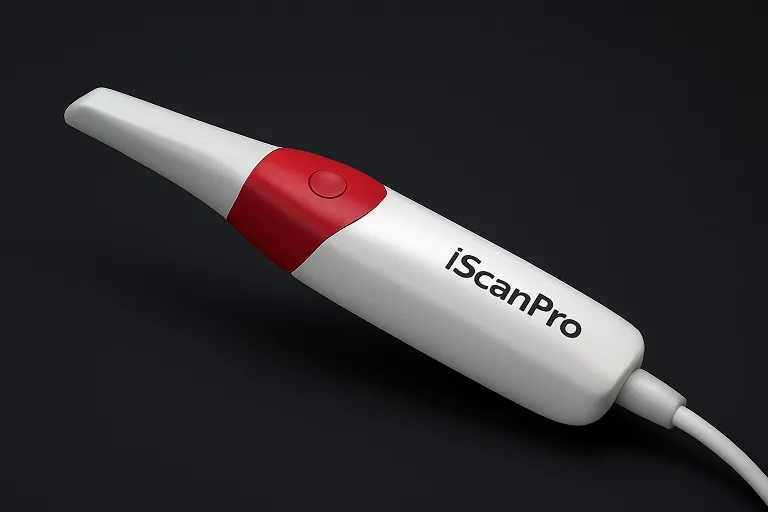
An intraoral scanner is a digital device with a camera. This camera captures 3D oral images with hard and soft tissues, without any harmful rays, messy impression materials, and patient discomfort. Instead of using impression material, the dentist slowly moves the scanner tip across both arches. Thousands of images are stitched together by the internal software, creating a precise digital 3D model.
For patients, digital scanners help to avoid the long sessions of keeping the mouth open, discomfort, gagging, and fear. Dentists skip re-taking the impressions for more accuracy, and dental labs get a clean, clear, reproducible digital file that can be used to fabricate precise prostheses like crowns, bridges, aligners, implants, and more.
How Intraoral Scanner Technology Works
Behind the ease of use, lies a blend of powerful technologies:
1. Optical Scanning
The scanner captures images using structured light, confocal microscopy, video scanning, or parallel confocal imaging, depending on the device. This helps the scanner pick up even tiny surface details.
2. Real-Time Processing
The software processes images instantly, generating a live 3D model the dentist can see while scanning.
3. Noise cancellation
Modern scanners use noise cancellation technology to remove the unwanted details of accessory soft tissue. It also enhances margins and fil ls small scan gaps automatically with the help of automated processes.
4. Integration With CAD/CAM Systems
Once the scan is ready, it can be sent directly to a dental lab like Illusion Dental Lab,
where technicians can start designing restorations immediately.
This technology helps save time, reduce errors, and deliver more predictable clinical outcomes.
Why Dentists Are Switching to Digital Scanning
1. Better Accuracy
Digital impressions reduce human error. When the scanner captures soft tissues, hard tissues, and margins clearly without any discrepancy, labs are able to design the restorations accurately that do not need to be adjusted chairside. Digital scanners have reduced the rework in dentistry dramatically.
2. Faster Turnaround
Since there are no physical impressions that are expected to be transported to the lab, which took a lot of time, digital files reach the lab instantly, so it saves time and also digital fabrication reduces human errors.
3. A Better Patient Experience
Most clinics say once patients experience digital scanning, they never want traditional impressions again. Digital scanners make the whole process of recording impressions quick, clean, and comfortable, which can never be the case with traditional ways.
4. Easy Documentation
Digital scans are saved in digital files, which are easy to save for the patient’s long-term record. Dentists can use them for monitoring wear, gum recession, movement, or treatment progress.
5. Cost-Effective in the Long Term
Although the initial cost can feel high, the comfort, accuracy, and restoration fit justify the price of an intraoral scanner very easily.
What Is the Price of an Intraoral Scanner?
The price of an intraoral scanner varies widely depending on brand, speed, and features. On average, a good scanner ranges from medium to higher range depending upon their characteristics and functionality.
Clinics should evaluate not just the price, but the support, software updates, and compatibility with their lab.
What Makes a Scanner “The Best”?
There isn’t one single best intraoral scanner. Different clinics need different features depending on their workload and procedures. However, good scanners usually excel in:
1. Speed
A full-arch scan for under 45 seconds is ideal for busy clinics.
2. Accuracy
Especially for implant cases and detailed crown margins.
3. Ease of Use
Lightweight wands, simple interfaces, and intuitive workflows make digital adoption much smoother.
4. Open File Format
A scanner that exports STL/PLY/OBJ files ensures you can work with any lab, including Illusion Dental Lab.
5. Software Capability
Margin marking, bite calibration, AI tools, and cloud storage add real clinical value.
6. After-Sales Support
A scanner is only as good as its training and service. Clinics should always check for local support teams.
Why Intraoral Scanners Matter to Labs
Dental labs depend heavily on scan quality. A precise scan means:
better adaptation
stronger contacts
predictable bite
fewer remakes
perfect final aesthetics
Illusion Dental Lab has seen a clear improvement in fit and finishing when clinics transition from traditional impressions to digital scans. For zirconia crowns, implant prosthetics, full-arch cases, and aligners, a clean digital scan is often the starting point for a successful restoration.
The Future of Intraoral Scanner Technology
The next generation of scanners will integrate more features:
caries detection
shade matching
real-time analysis
AI-based design suggestions
faster processing
As dentistry becomes digitally centered, scanners will move from optional tools to daily essentials.
Should Your Clinic Invest in i ScanPro?
There is no doubt that if you want to upgrade your treatment success and perform highly precise dentistry, you should be the one to use intra oral scanners to save time, save the reworks and deliver high-quality restorations. Intraoral scanners like i Scan Pro improve patient experience, enhance lab communication, and boost overall practice efficiency.
Clinics working with Illusion Dental Lab often see:
fewer chairside adjustments
faster case approvals
consistent results
a smoother workflow between clinic and lab
The digital shift is no longer a trend; it is the new standard.
Conclusion
The rise of the intraoral scanner, i ScanPro by Illusion, marks a major leap in how dentistry is practiced. For dentists, it brings speed, clarity, and accuracy. For labs, it improves design workflows and restoration quality. And for patients, it transforms the dental visit into a more comfortable experience.
As one of India’s leading dental labs, Illusion Dental Lab continues to support clinics in making this transition with reliable design systems, advanced CAD/CAM processes, and a team trained to work with scans from all major brands.
If your clinic is planning to move toward digital dentistry, the intraoral scanner is the best place to begin.





All rights reserved