Implant Abutment - How to Choose Correctly?
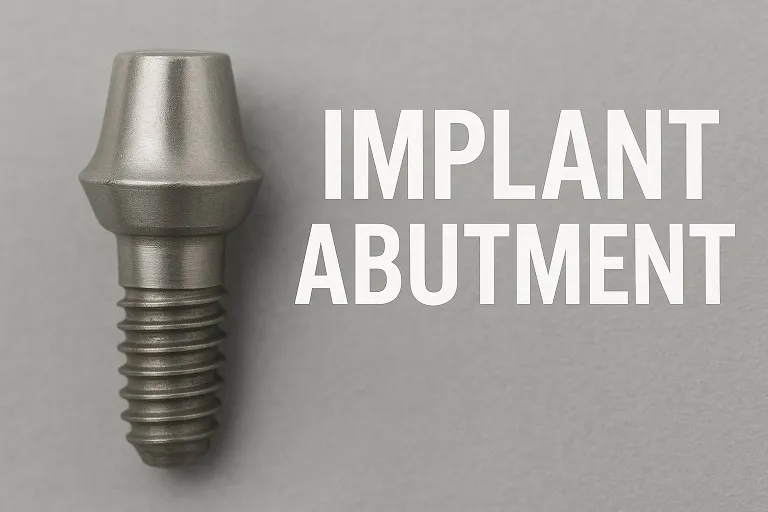
Dental implants are as close a restoration can get to a natural tooth. They are growing in popularity as most patients are willing to spend a bit more initially and choose dental implants to replace their lost teeth. The procedure for placing a dental implant and the way it is performed is the reason why they have become the ultimate treatment option for replacing a tooth. There are multiple components in an implant restoration, and the crown that one can see in the mouth is just one part of the complete implant assembly. Implants consist of a dental implant - the replacement of the tooth root that is placed in the mouth, the dental implant abutment, which is placed as a connector between the implant and the final restoration and finally the implant restoration, the replacement for teeth that you can see in the mouth. The appropriate choice of dental abutment is at the heart of any implant restoration. It affects how natural the restoration looks, the health of the gums, and how long the whole implant restoration lasts. So, let’s learn more about it.
Types of Implant Abutment:
There are many types of abutments; knowing which option is better is crucial for the long-term success of the case. Some of the common types are:
1. As per the fabrication type:
a. Stock Abutments:
- Pre-manufactured in standard shapes, angles and sizes.
- More affordable.
- Suitable for less critical cases.
b. Custom Abutments:
- Individually designed to match the patient’s anatomy.
- Provides optimal aesthetics and functionality.
- Made using advanced CAD/CAM.
2. As per the stage of treatment
a. Healing Abutments (Transmucosal Abutments)
- Placed during the healing phase.
- Helps in shaping the soft tissue around the implant.
- Removed & replaced with the final abutment/restoration.
b. Temporary/Provisional Abutments
- Used to support interim crown and bridge.
- It helps sculpt the emergence profile.
c. Definitive Abutments (Final Abutments)
- Used beneath the final crown, bridge, or denture.
- Includes various categories and types.
3. As per the prosthetic connection type
a. Single-Unit Abutments
- Used for single crowns.
- Standard straight or angled abutments.
- Available as stock or custom CAD/CAM designs.
b. Multi-Unit Abutments (MUA)
- Used in full-arch or multiple implant restorations (e.g., All-on-4).
- Allow different implant angulations to be corrected.
- Provide a common prosthetic platform.
c. Cantilever Abutment (mostly considered as a type of restoration design instead of an abutment type)
- Supports a restoration which extends beyond the last implant.
- Provides a functional and aesthetic extension.
- Helps design bridges efficiently when implants can’t be placed in ideal positions.
d. Overdenture Abutments
- Such as ball or locator attachments.
- Used to provide retention for removable dentures, offering stability and support.
4. As per the retention method
a. Screw-Retained Abutments
- The crown or prosthesis is screwed into the abutment.
- Retrievable; ideal for full arches.
b. Cement-Retained Abutments
- The crown is cemented onto the abutment.
- Aesthetic advantage (no screw access opening).
5. As per material type:
a. Titanium/Metal Alloys
- Provides strength, durability, and longevity.
- Used in the majority of cases where aesthetics is not a concern.
b. Zirconia/Ceramic
- Ideal for front teeth because of a tooth-like look
- A great alternative to metal in aesthetically demanding cases
c. Hybrid Abutments
- It has a titanium base bonded to ceramic material.
- Combines the strength of metal at the implant connection with the aesthetics of ceramic at the gum line.
How to Choose the Correct Implant Abutment for a Case?
A clinician has to consider many different things before deciding on a particular implant abutment type. Let’s discuss some of the most common factors which impact the type of implant abutment.
1 - Location & Angle of Implants - The location and angle of implants make a massive difference. If an implant has been placed at a bit of an angle, the dentist might need an angled abutment to make sure the final crown comes out looking normal.
2 - Aesthetic Requirements - This is extremely crucial, especially at the front of the mouth, where everyone can see. For those cases, zirconia abutments often work better than titanium because they won't show through the gum or create that greyish shadow you sometimes get with metal. The way the tooth emerges from the gum needs to look like a natural tooth would; it can neither be too bulky nor too thin.
3 - Type of Restoration - The type of restoration affects this decision, too. A single crown needs something different from a full bridge across several teeth. Multi-unit abutments are mostly chosen for long-span restorations because they are stable and make the whole prosthetic process simpler.
4 - Thickness of the Gum - The thickness of the gums around the implant can't be ignored. Thick gums might hide a metal abutment just fine, but the case is not the same with thin gums. Dentists usually check this when they are planning treatment to figure out which material and design would actually work.
5 - Chewing Forces - Back teeth take way more pressure than front ones when you are eating, so the abutment needs to be tough enough to handle that without breaking or loosening over time.
Which is the Smarter Option?
It is difficult to choose an ideal abutment from the inventory of stock abutments a clinician has, and that is why customized solutions are really where things are heading, and for good reason. Illusion Smart Abutments are designed using the latest technology to match each patient's specific anatomy and what they need aesthetically. It takes care of the angulation, emergence profile, and gum requirements, fulfilling every criterion of an ideal implant restoration.
Conclusion:
Implant abutments connect the implant placed in the bone to the crown that you see in the mouth. Choosing the right implant abutment can be a little tricky. What’s perfect in one case might be completely wrong for another, which is why dental professionals tend to make this choice carefully.
Custom smart abutments, viz., Illusion Smart Abutments, are the answer to the problems related to abutments, as stock options tend to be limited when it comes to fulfilling case-specific requirements. Choosing an appropriate abutment sets everything up for a restoration that lasts ages, looks natural, and functions like a natural tooth.





All rights reserved